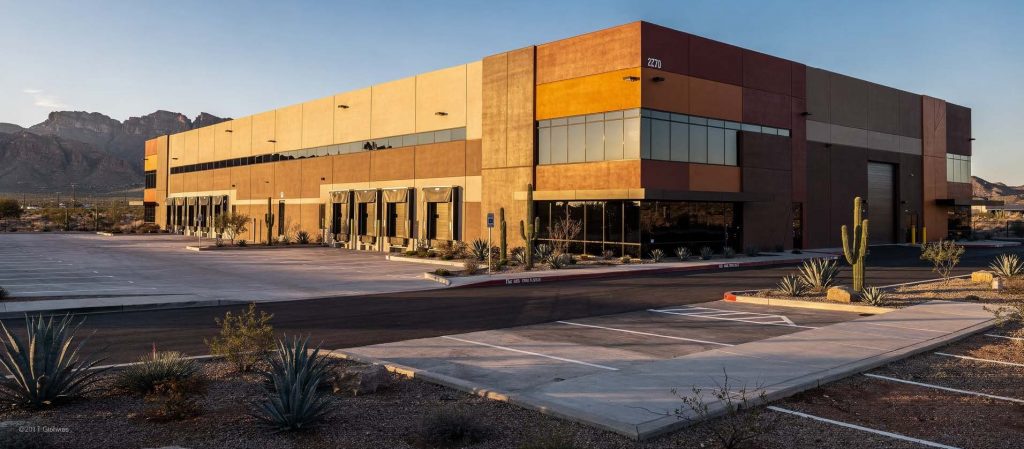
Tucson’s industrial market is ending 2025 in a higher vacancy, slower rent growth phase, which is creating a more tenant and buyer friendly environment going into 2026especially for users tied to advanced manufacturing and cross border trade. Elevated tariffs and shifting U.S. Mexico trade patterns will pressure some sectors but also reinforce Southern Arizona’s role as a strategic U.S. foothold for companies serving both sides of the border.
Market Snapshot: End of 2025
After a major wave of speculative deliveries in late 2023 and 2024, Tucson’s metro wide industrial vacancy has moved from the low16% range to around 8% in 2025, with projections that it could push above 10% as additional supply delivers in 2026.
Over the past year, tenant demand has softened, and local reports note negative net absorption and rising sublease availability, particularly in larger bay logistics product, even as of new spec continues through the pipeline.
Rent growth has decelerated sharply; average asking industrial rents in Tucson are now growing well below the national average, and some submarkets are expected to see flat or slightly negative effective rent trends as landlords increase concessions.
Advanced Manufacturing and Southern Arizona
Advanced manufacturing has emerged as one of Southern Arizona’s most powerful engines of economic growth, spanning battery technology, mining technology, optics and photonics, logistics, medical devices, and aerospace and defense. Fueled by federal investment, supply chain realignment, and rapid innovation, these sectors are expanding faster than traditional manufacturing and redefining what it means to be competitive in the Tucson region.

Battery Technology
Cutting-edge energy storage solutions driving the clean energy transition

Mining Technology
Advanced systems for resource extraction and processing

Optics and Photonics
Precision optical systems and photonic devices

Medical Devices
Innovative healthcare technology and equipment manufacturing

Aerospace and Defense
Defense electronics and aerospace component production

Integrated Logistics
Advanced supply chain and distribution operations
From advanced mining systems and precision optics to medical devices, defense electronics, and integrated logistics operations, Southern Arizona’s advanced manufacturing projects are delivering high-quality jobs while demanding new approaches to infrastructure, workforce training, and site readiness across the region.
How 2026 Conditions Benefit Tenants and Buyers
More Leverage on Pricing and Terms
Higher vacancy and slower absorption are shifting negotiations away from 2021 & 2022’s landlord friendly conditions toward more balanced or tenant leaning deals, with improved opportunities for free rent, TI allowances, and flexibility on term length.
Buyers and owner users benefit from softer caprate compression and more motivated sellers especially for assets that are struggling to backfill space or refinance while still tapping into long-term fundamentals tied to population growth and advanced manufacturing.
Better Selection and Modern Space
Newer Class A projects near the airport, I10, and key logistics corridors are delivering functional space (higher clear
heights, deeper truck courts, ESFR sprinklers) that previously was scarce in the Tucson inventory, allowing tenants to upgrade without a major rent premium versus older product.
Small and midbay users in and other tightly supplied nodes gain options as additional spec is completed, while older and less functional buildings face more competition, improving negotiating power for users willing to consider second-generation space.
Tucson, Mexico, and Tariffs in 2026
Tariff Landscape and Arizona Exposure
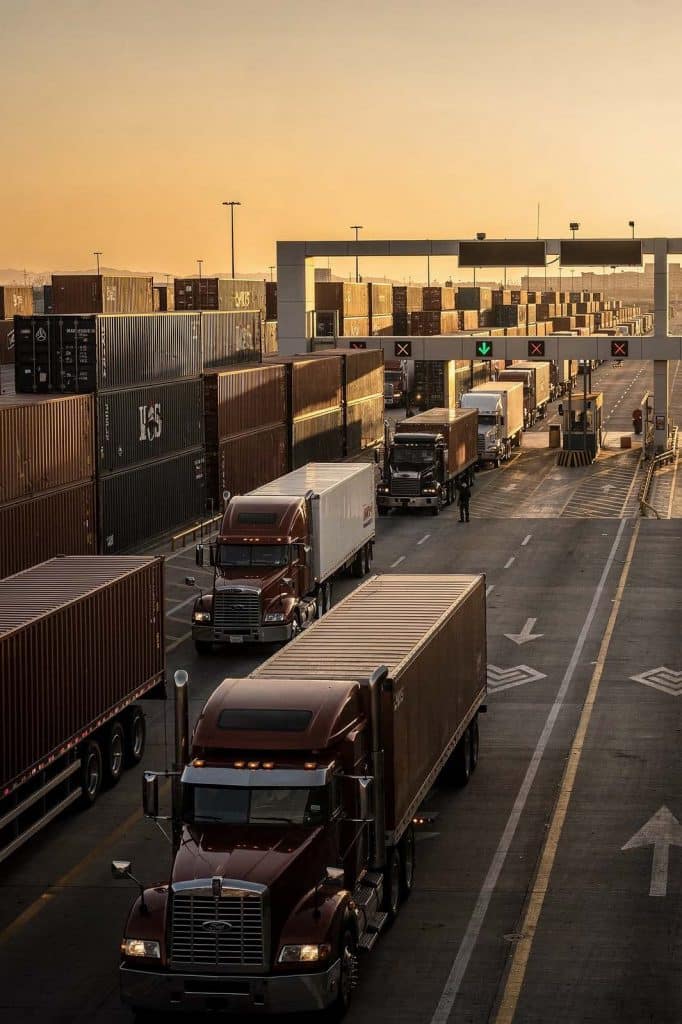
New and proposed tariffs on goods from Mexico and Canada are a major concern for Arizona, which relies on Mexico as its largest trading partner with nearly $20 billion in annual two-way trade and thousands of jobs tied directly to cross-border flows.
Broader tariff actions especially on steel, aluminum, automotive components, and Chinese goods that move through Mexican supply chains raise input costs, complicate sourcing, and increase the value of locations that can use Foreign-Trade Zones and efficient logistics to manage landed cost.
Implications for Tucson Industrial Demand
Cross-Border Manufacturing Pressure
Companies that manufacture in Mexico or source components there but sell into the U.S. are under pressure to establish or expand U.S. footprints for warehousing, light assembly, final configuration, and compliance, and Southern Arizona is a natural staging area.
Strategic Advantage
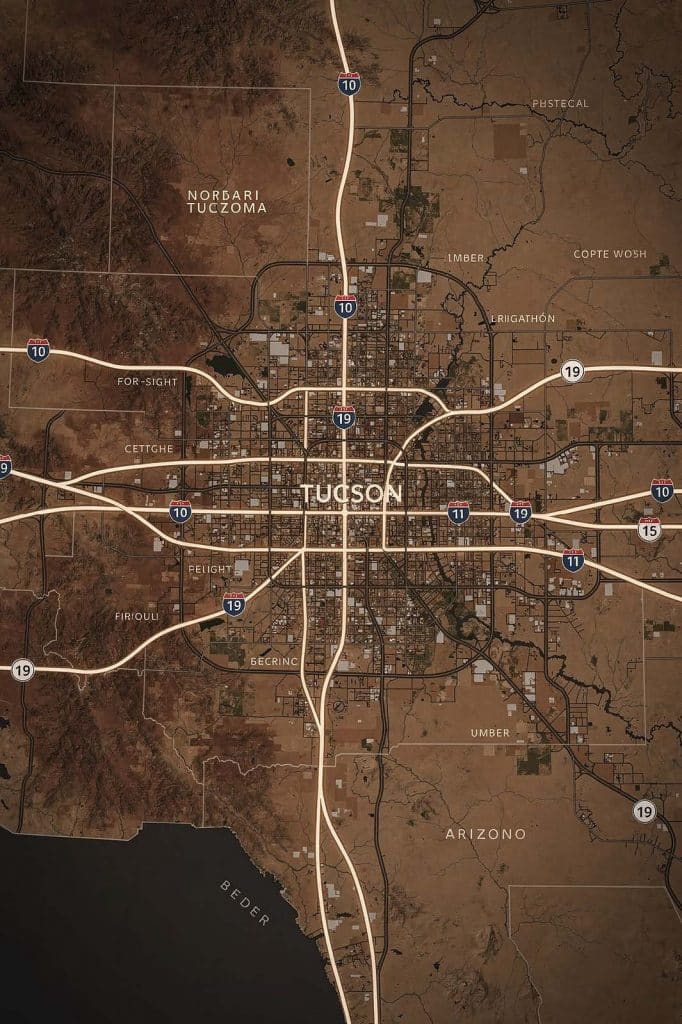
While higher tariffs can temper some export-oriented activity, the depth of U.S.–Mexico integration and the difficulty of unwinding those supply chains mean cross-border manufacturing will continue; in this environment, Tucson’s proximity to Nogales ports of entry, I-10/I-19, and rail lines becomes a strategic advantage for 2026 location decisions.
Key Trends to Watch in 2026
Rising Vacancy but “Bifurcated” Performance
Overall Vacancy Rising
Overall vacancy is expected to rise as the 2024–2025 construction wave finishes, but modern, well-located space in Airport, Northwest/Marana, and I-10 logistics corridors should lease faster than older product in fringe locations.
Specialized Sectors Remain Resilient
Flex and specialized industrial serving advanced manufacturing, aerospace/defense, and clean-energy sectors are likely to remain relatively resilient, while large-bay bulk logistics may face longer lease-up times and sharper rent resets where demand has cooled.
More Sublease and Emphasis on Flexibility
Sublease inventory is expected to remain elevated, giving tenants opportunities for below market rents and shorter remaining terms useful for companies navigating tariff and demand uncertainty.
Corporate users are prioritizing flexibility: expansion/contraction rights, renewal options, and the ability to reconfigure space in response to changing production and trade patterns will be critical deal points.
1 Expansion/Contraction Rights
Ability to scale space up or down based on business needs.
2 Renewal Options
Flexible terms for extending lease agreements.
3 Space Reconfiguration
Adaptability to changing production and trade patterns.
Advanced Manufacturing and Nearshoring as Long-Term Drivers
Projects like ABF, continued Raytheon growth, and potential additional suppliers or allied manufacturers will anchor long-term demand for high-quality industrial and R&D space, even through short-term cycles of higher vacancy.
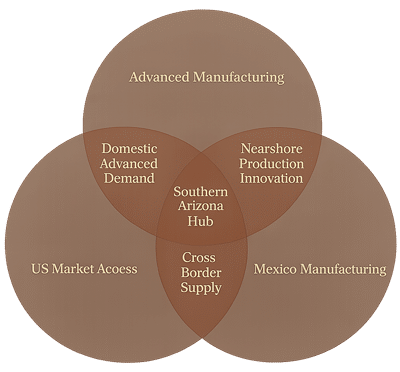
Nearshoring to Mexico plus tariff pressure on extra-regional imports will keep Southern Arizona on the radar for manufacturers seeking a U.S. base that balances cost, access to talent, and rapid connectivity to Mexico and the broader U.S. market.
Ready to Capitalize on These Market Conditions?
To capitalize on these market conditions and align your next lease, renewal, relocation, or purchase with your business strategy, contact Commercial Real Estate Group of Tucson, LLC.
Whether you’re looking to expand, relocate, sell or invest in Tucson’s industrial market, our team can help you navigate the opportunities created by current market dynamics.
Contact Us
Phone: 520-299-3400
Email: Michael@cretucson.com
Share your experiences on working with Commercial Real Estate Group of Tucson.